

Ray Culver Begins Revealing the Hidden Architecture of H2ONU
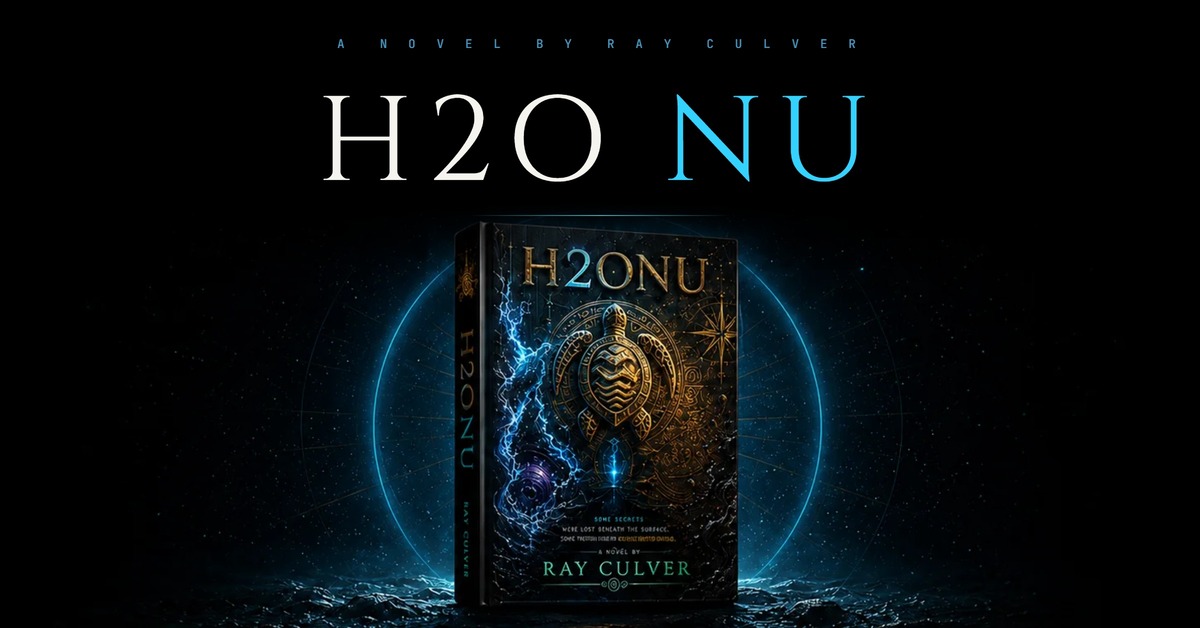
H2ONU by Ray Culver — the 752-page full-color first edition | The Intercept
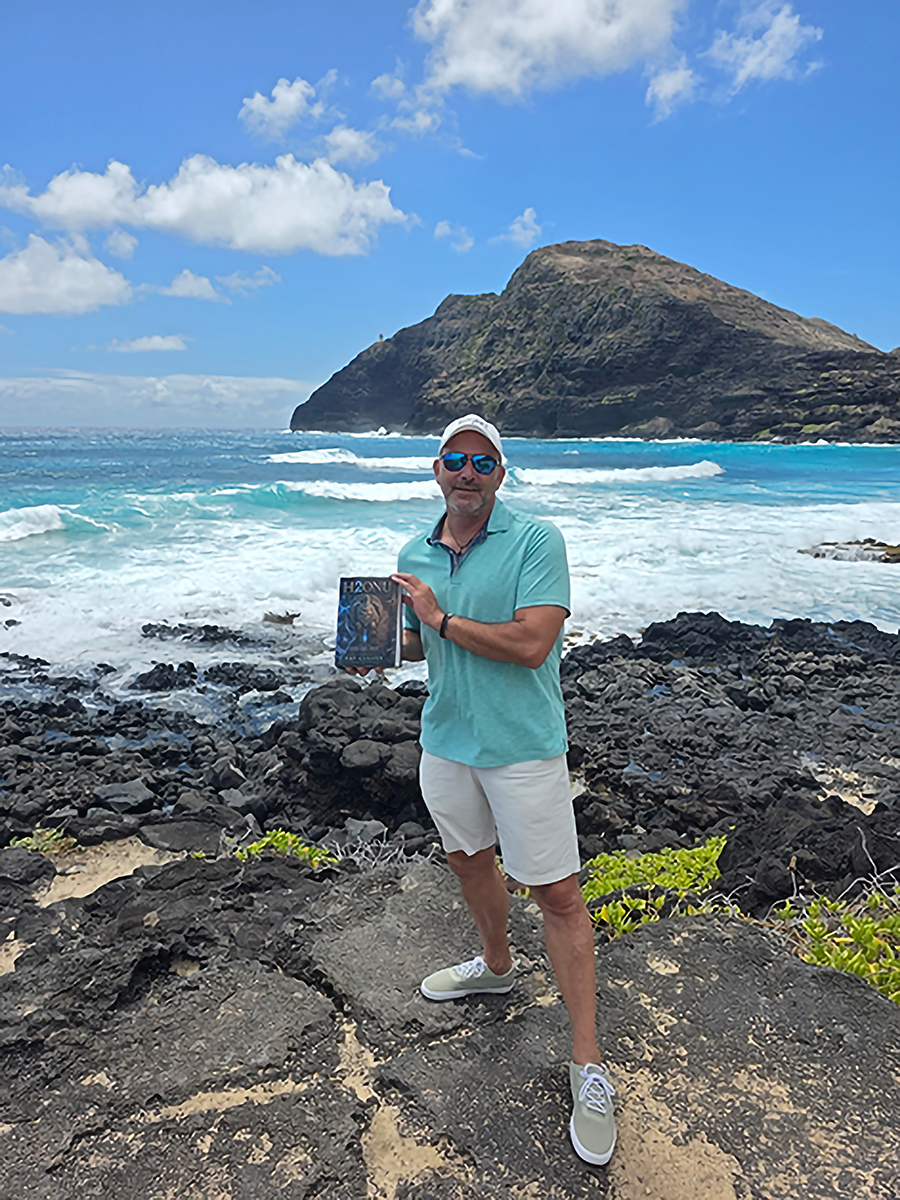
Author Ray Culver with his debut novel H2ONU: The First Edition on the Makapuʻu coast, Oʻahu.
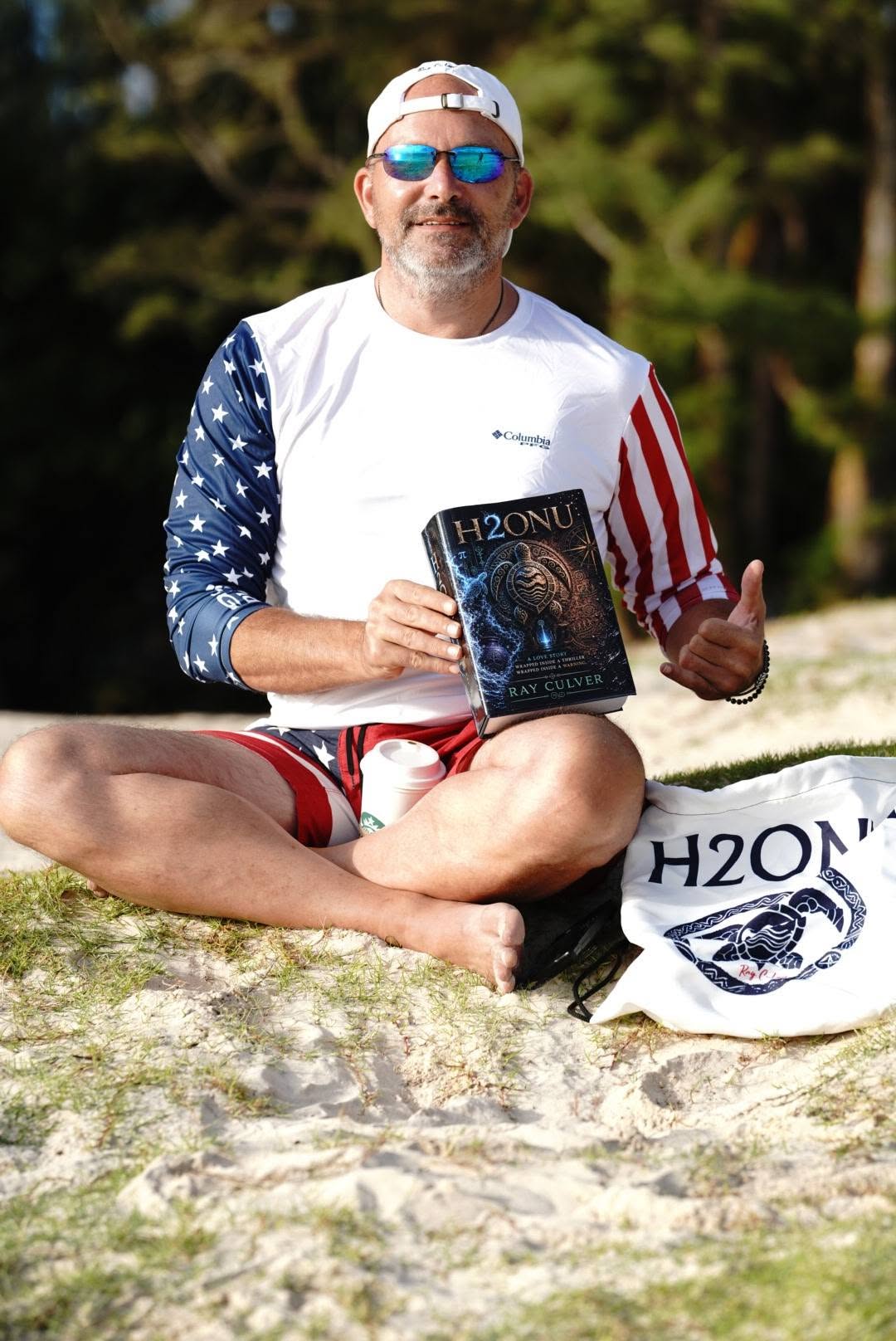
Author Ray Culver with H2ONU: The First Edition — his 752-page, full-color debut novel.
The Debut Readers Are Already Mapping on Their Own Walls — a 752-Page Novel Culver Says Was Designed to Be Misunderstood Before It Could Be Understood
HONOLULU, HI, UNITED STATES, August 11, 2026 /EINPresswire.com/ -- It isn't the ending people talk about. It's what happens after.
Ray Culver's 752-page debut, H2ONU, is the kind of novel readers map on their own walls — pinning up recurring symbols, repeating dates and scenes that seem to answer one another — because it withholds its full shape on a first read. Now, with the novel in readers' hands, Culver is beginning to explain the design behind it: H2ONU, he says, was made to be misunderstood before it could be understood.
Culver built his debut to be read at least twice — and he says each read is a different book. The first time through, it moves like a thriller: a love story that becomes political intrigue, environmental collapse, ancient civilizations, faith, propaganda, Chinese espionage, and a machine that runs on water. The second time through, something else surfaces. A symbol that appeared once, then again, then again. A date that keeps returning. By the last page, the connections are impossible to unsee.
"Nothing is random," Culver says. "Some things simply reveal themselves later."
That's not a claim about a crowd. It's a claim about an object anyone can hold. H2ONU runs 752 full-color pages across 80 chapters, and every chapter enters through art. The typography, symbols and visual interruptions aren't decoration; some conceal meanings that won't surface until hundreds of pages later.
BUILT AS A RECURSION
Culver didn't write H2ONU as a straight line. He built it as a wave folding back into itself — a novel about déjà vu that is itself an act of déjà vu. You read the chapter you're in, a later chapter re-illuminates it, and you return to the earlier words to find they've changed — because now you know what they were always pointing toward.
"The future isn't the only thing that isn't fixed. Neither is the past — we revise it every time we remember it," Culver says. "You read it forward, then you go back and read the same words as a different person."
THE QUESTION BENEATH THE PATTERN
H2ONU — pronounced "honu," with the 2 silent — repeatedly places fate and free will into conflict, asking whether recognizing a pattern is enough to change it.
"History doesn't repeat because history is alive," Culver says. "People repeat systems. Institutions repeat incentives. Fear repeats choices. Fate is the recurrence. Free will is the interruption."
Culver isn't presenting the novel as a prediction. His argument is broader: civilizations build structures around fear, concentrated power and perceived scarcity, then act surprised when those structures produce familiar consequences. One of its central ideas is that the future may already be written — but perhaps in erasable ink.
"People keep asking whether H2ONU predicts the future," Culver says. "It doesn't. It asks something more uncomfortable — what if the future is just the part of history we haven't recognized yet?"
A LOVE STORY AS THE WAY INSIDE
Rather than deliver those ideas as an essay, Culver works through people. At the center is Ray Hershey, a man who lost the future he thought he was building and rebuilt himself around a single conviction — that no other person could be the source of his purpose or happiness. Then Hawaiʻi happened, and love penetrated the one door he'd painstakingly fortified. His path collides with a revolutionary water-based energy technology, competing governments, and the possibility that the woman he loves may become the price of changing the world.
"You can explain governments and collapse until people stop listening," Culver says. "Make them care about one person, and suddenly every abstract idea has a heartbeat."
Culver describes H2ONU as "a love story wrapped inside a thriller wrapped inside a warning." The machine creates the pursuit. The people make it matter.
WRITTEN BY HAND
In an era of instant, machine-made text, H2ONU was made the slow way — roughly 41,000 hours across eight years to write the novel and build the world around it, every word Culver's own. The recursion, the mirrored motifs, the meanings that only pay off hundreds of pages later: that architecture is written and constructed by hand, on purpose — not generated.
A MACHINE, AN ISLAND, AND WHAT SURVIVES
The novel is set largely in Hawaiʻi, where the island isn't a backdrop but a coordinate. When it goes dark and a machine built for liberation becomes the most dangerous object in the Pacific, the story stops being about whether technology can change the world and starts being about who gets to decide what kind of world survives.
The story also keeps moving after the last page. In late July, Culver opened The H2ONU Intercept, a live, AI-driven story experience where visitors break into private conversations among the novel's characters. It's inspectable right now — and it behaves the way the book does.
H2ONU: The First Edition is available now — a full-color hardcover, $79.99, ISBN 979-8-9922333-0-8, through H2ONU.com and Ingram distribution. Eighty chapters. Five voices. One pattern hidden in plain sight.
ABOUT H2ONU
H2ONU is the debut novel by Ray Culver, a mythic eco-thriller set primarily in Hawaiʻi that combines speculative technology, political conspiracy, ancient symbolism, faith and a deeply human love story inside a 752-page, full-color First Edition. Its central invention — a device capable of turning water into clean, portable energy — threatens the institutions whose power depends on controlling scarcity. A portion of every purchase supports Hawaiian sea turtle conservation through the H2ONU Initiative.
ABOUT RAY CULVER
Ray Culver is a Philadelphia-born writer shaped by eight years in Hawaiʻi that changed how he understood love, faith, reinvention and the invisible systems shaping the world. H2ONU is his debut novel. It took eight years to build. The life behind it took longer.
MEDIA CONTACT
Ray Culver — Author & Creator, H2ONU
press@h2onu.com
Press kit: h2onu.com/press
###
Ray Culver
H2ONU
press@h2onu.com
Legal Disclaimer:
EIN Presswire provides this news content "as is" without warranty of any kind. We do not accept any responsibility or liability for the accuracy, content, images, videos, licenses, completeness, legality, or reliability of the information contained in this article. If you have any complaints or copyright issues related to this article, kindly contact the author above.
